50% OFF* For The First 12 Weeks – Use Discount Code HUB123
* Terms & Conditions
* Terms & Conditions
Dresser, small mattress set, and several boxes
Call 01480 417 785 To View A 25ft² Unit
*An example of what can be fitted in a 25ft² unit
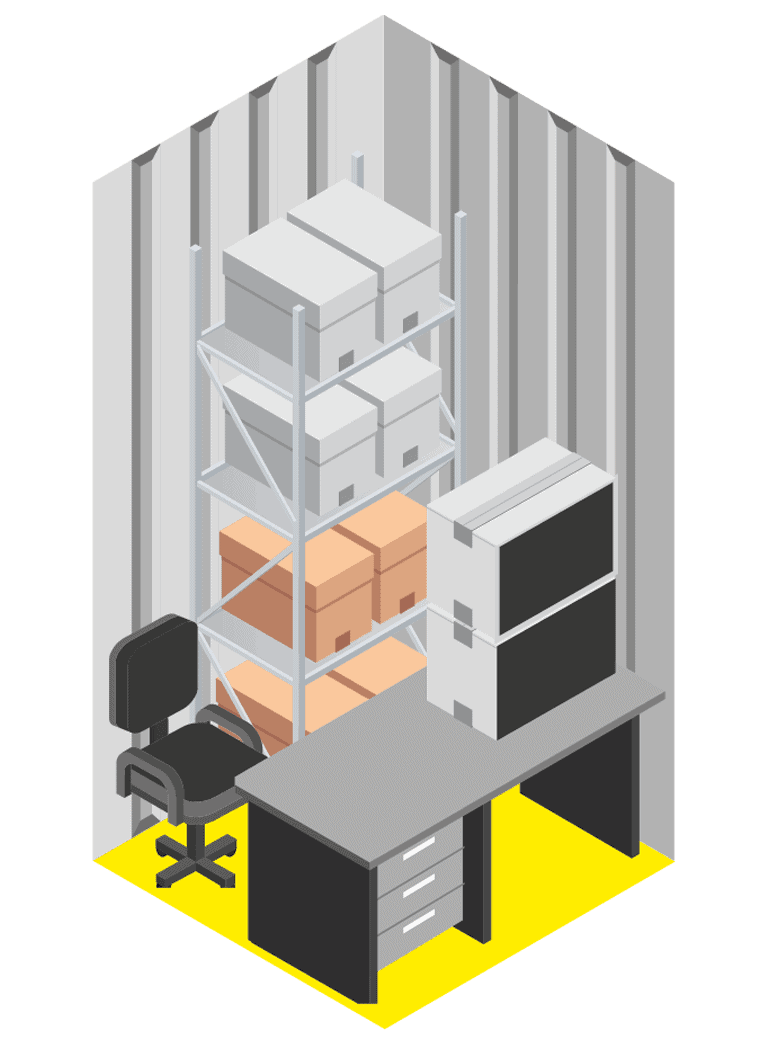

If you can fit the contents in an estate van then a 25sqft² unit could be suitable.
Queen-sized mattress set, dresser, TV, and several boxes (could fit a smaller chez lounge or other small furniture)
*An example of what can be fitted in a 5 x 10
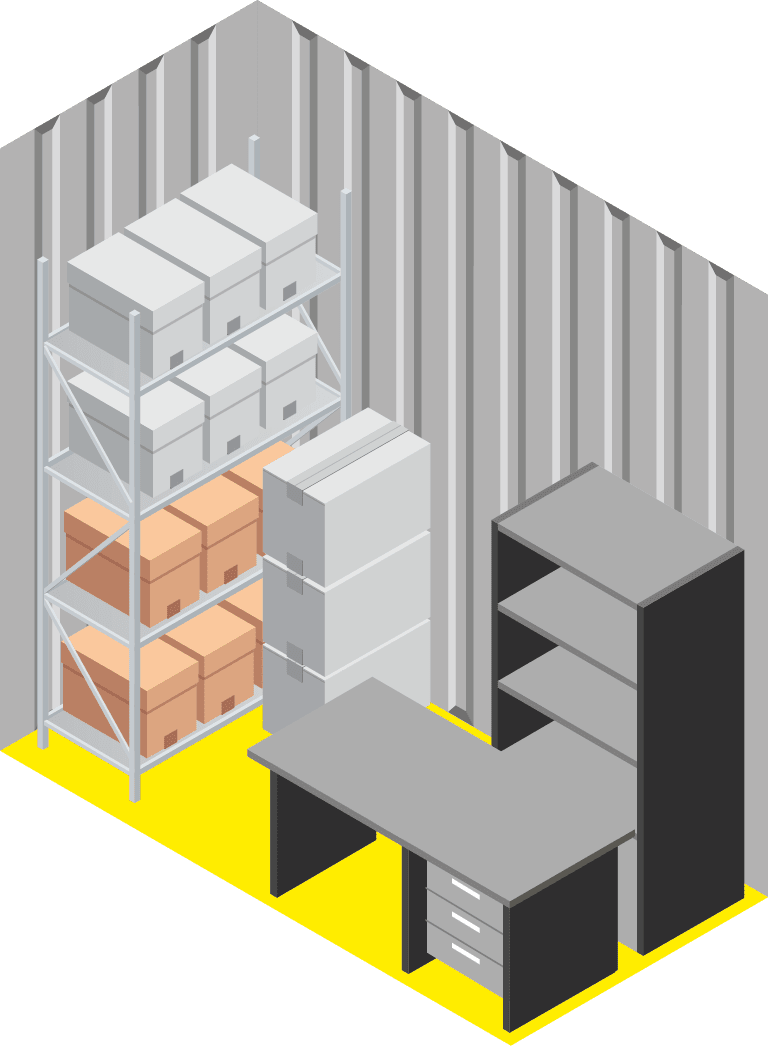

If you can fit the contents in an transit van then a 50sqft² unit could be suitable.
Typically you can store two full bedrooms (mattress sets, night stands, dressers, wardrobes etc.) and the contents from a family room (settee, coffee table, chairs, bookshelves, etc.)
*An example of what can be fitted in a 10 x 10
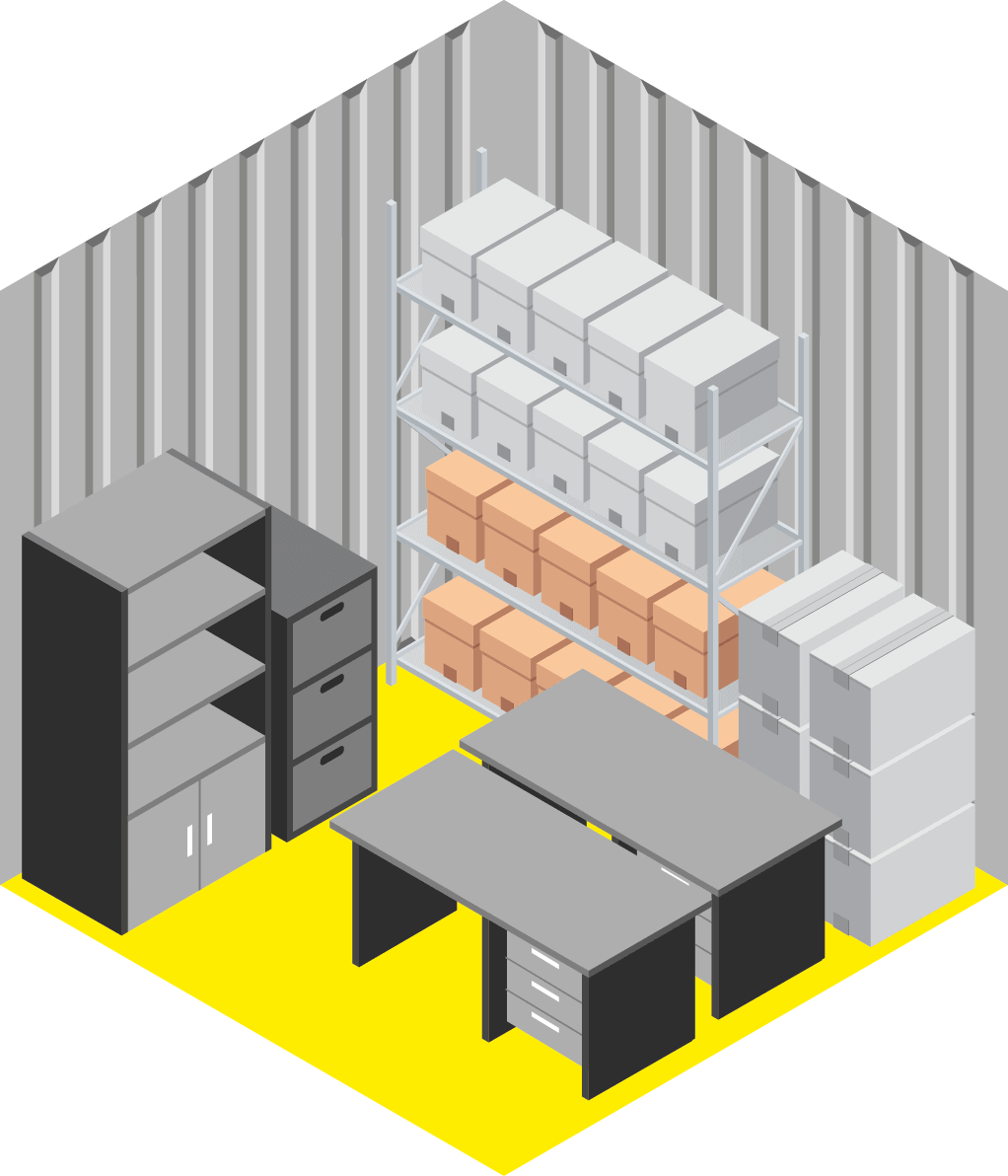

If you can fit the contents in an LWB transit van then a 100sqft² unit could be suitable.
Three full bedrooms, plus larger furniture (sofas, chairs, tables, appliances, etc.)
*An example of what can be fitted in a 10 x 15
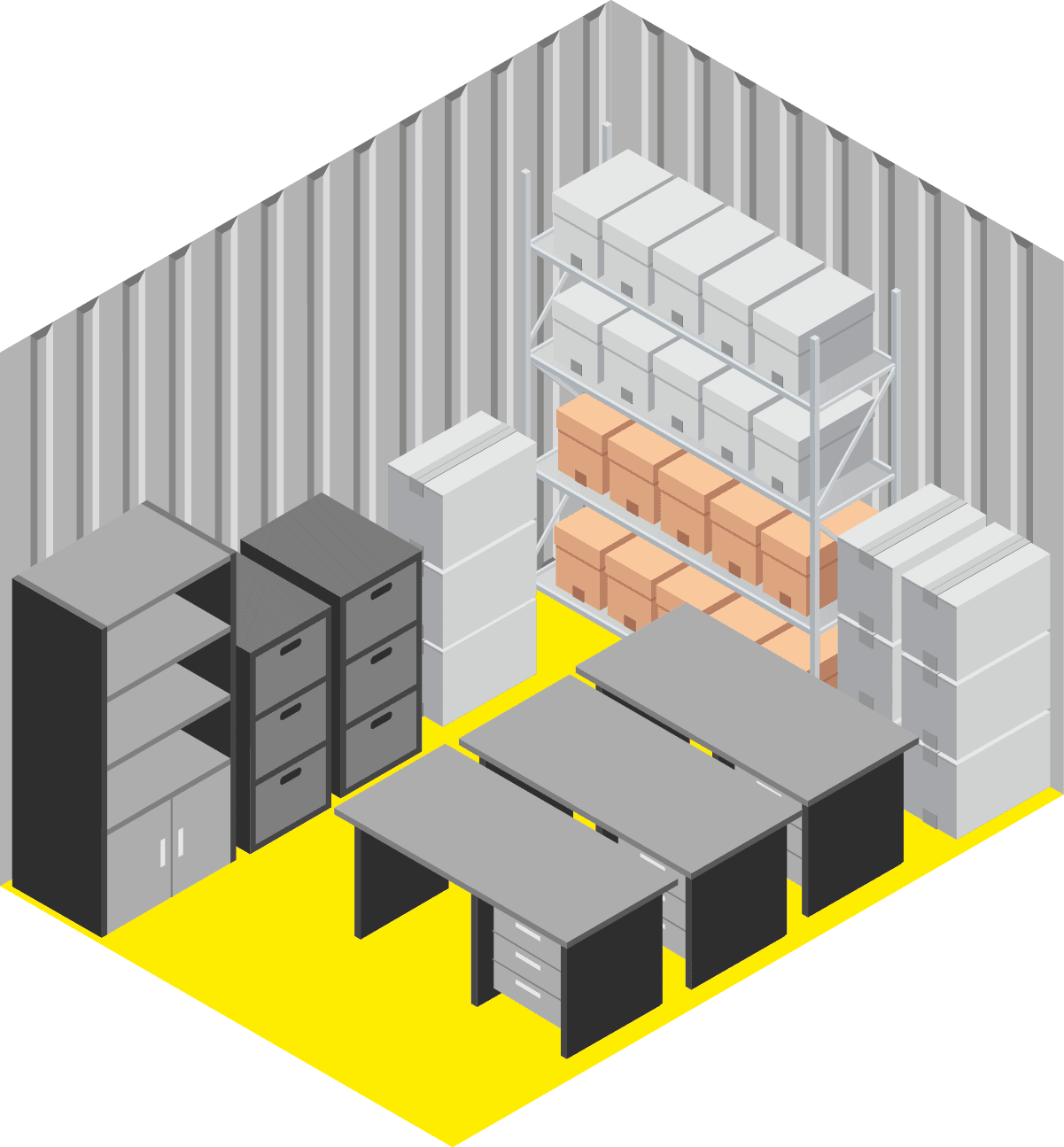

If you can fit the contents in an Luton van then a 150sqft² unit could be suitable.
Entire multiple-bedroom house, including large furniture (sofas, chairs, tables, appliances, etc.) and multiple storage boxes
*An example of what can be fitted in a 10 x 20
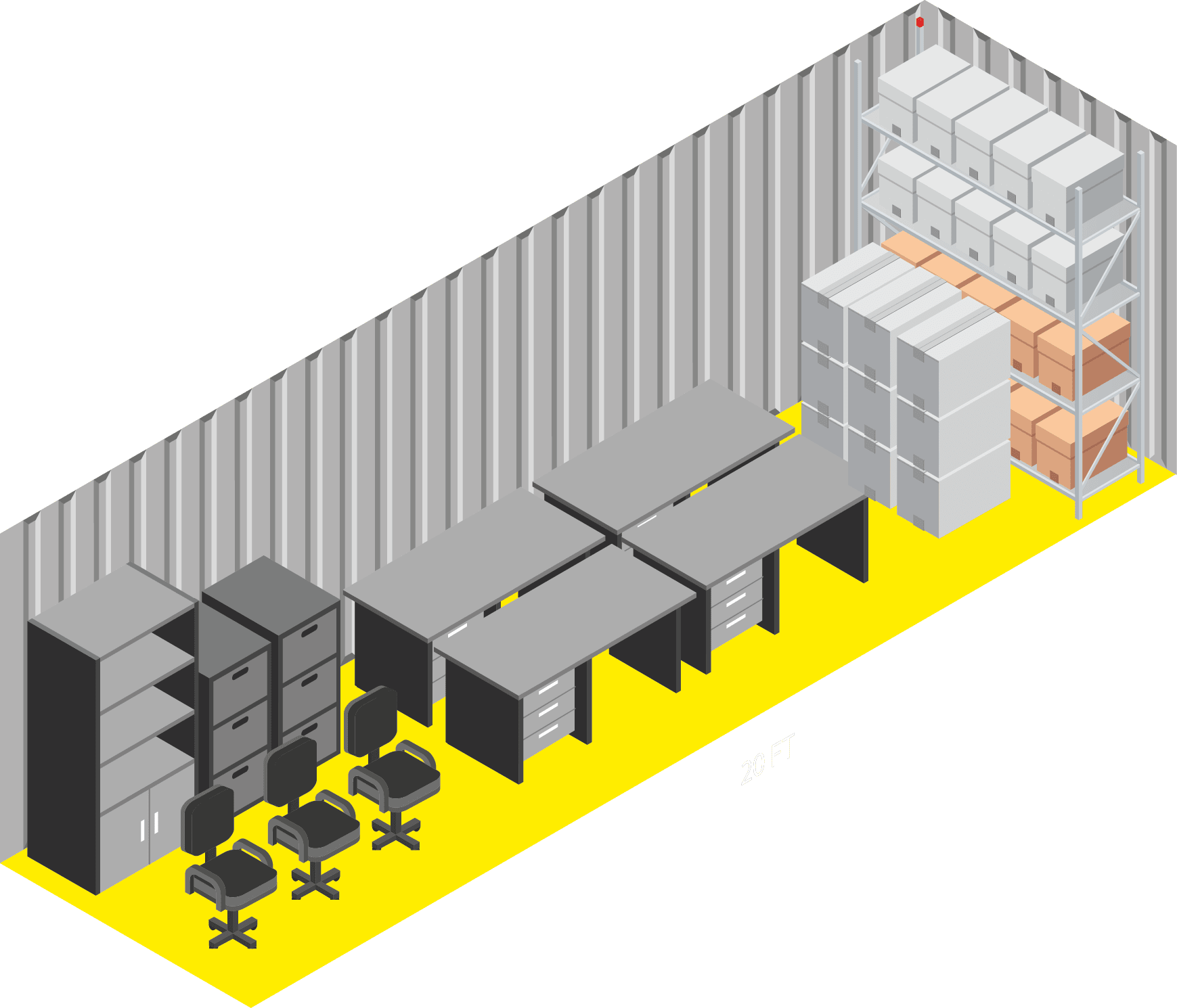

If you can fit the contents in an 7.5 ton truck then a 200sqft² unit could be suitable.
With careful packing you can pack the contents from an Entire multiple-bedroom house, including large furniture (sofas, chairs, tables, appliances, etc.) and all the home accessories that you have carefully boxed.
Before you look at the self storage unit size options available to you, make an inventory ( detailed list) of everything you want to put into storage. The best approach is to get out the tape measure for some of your larger items to determine the smallest space they can fit into and then read the self storage size guide.
Important – The bigger the storage unit the higher the storage cost. Once you have identified what you’re going to store, you can use the size guide to establish what self storage unit size will be best.
Please Note – The above diagrams are for illustrative purposes only. What you can fit in your storage units is dependent upon the shapes and sizes of the items to be stored,. How well you pack the unit and whether you need to leave space within the unit to find and extract items easily whilst they are in storage.
Choosing the correct sized self storage unit is important to ensure that you are not paying for more space than you need and to avoid any potential damage to your belongings from overcrowding. Here is a guide to help you choose the right size self storage unit:
It’s always better to choose a slightly larger unit than a smaller one to avoid any problems with overcrowding or damage to your belongings. By following these tips, you can ensure that you choose the right sized self storage unit for your needs.
Self storage Huntingdon made simple for households and businesses in Huntingdon, Godmanchester, Alconbury, St Neots, Sawtry, Brampton, Wyton, St Ives and Cambridgeshire
For businesses who require Serviced offices, Hot Desking, Meeting rooms or Coworking space check out Brightfield Business Hub
Choosing the correct internal storage unit size is one of the most important decisions when using self storage. Pick a unit that’s too small and you risk running out of space. Go too large and you may be paying for unused capacity.
To help you make an informed decision, here are the five most common questions customers ask along with clear, practical answers.
This is by far the most common question, and for good reason.
The right size depends entirely on what you’re storing and how much of it there is. A few boxes require a very different space compared to the contents of an entire home.
As a general guide:
For example, a 50 sq ft unit can typically hold the contents of a small one-bedroom flat or around 100 boxes, while a 150 sq ft unit may accommodate a three-bedroom house.
The key takeaway: match your inventory to a realistic unit size rather than guessing.
Accurately estimating space is essential to avoid under- or over-sizing your unit.
Start by:
A simple method is to calculate the total floor area your items would occupy. For example, a 5 ft × 6 ft stack requires at least 30 sq ft of storage.
It’s also recommended to add an extra 10–20% space buffer to account for awkward shapes and inefficient packing.
Yes;and this is one of the most overlooked optimisation strategies.
Most storage units have sufficient vertical space, meaning you can:
However, stacking isn’t always perfect:
That’s why many providers advise considering how high you can realistically stack when choosing your unit size.
Choosing incorrectly usually leads to one of two problems:
The goal is balance. the right unit should be: Cost-effective, Organised and Easy to access
If in doubt, slightly overestimating (with a small buffer) is often safer than underestimating.
Both approaches are valid, but combining them gives the best result.
Property-based approach:
Many people estimate based on home size:
Item-based approach:
More accurate for:
Experts recommend starting with an inventory list first, then comparing it to typical unit sizes for real-life scenarios.
Choosing the correct internal storage unit size doesn’t have to be complicated. By asking the right questions and taking a structured approach, you can avoid unnecessary costs and ensure your belongings are stored safely and efficiently.
At The Storage Hub UK, getting the right unit size means you only pay for what you need, while keeping your items secure, organised, and accessible.


© 2025 The Storage Hub. All rights reserved. Web Design and Marketing by Blue Dolphin Business Development